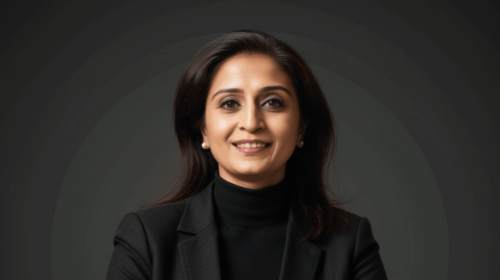
At BrilliantRead Media, we always strive to bring meaningful and powerful stories from India and around the world to empower and motivate our growing community. As part of this endeavour, we invited Deepal Mistry for an exclusive interview with us. Deepal is an Entrepreneur and Founder & CEO at Ascent Insights. Let’s learn more about her background, journey and her advice for our community!
Excerpts from our exclusive interview with Deepal:
Your journey from corporate leadership to building Ascent Insights is inspiring. What was the turning point that made you take the entrepreneurial leap, and what were the toughest early lessons?
One experience that shaped me was building the TELMA journey, eventually a ₹1,000+ crore franchise, also documented as an HBR case study. The biggest unlock wasn’t a single campaign; it was getting everyone aligned on a few high-conviction choices.
What we would stand for, who we would prioritise and what we would stop doing. That taught me that growth becomes sustainable when strategy is reduced to clear decisions that execution can actually honour.
That insight stayed with me, and over time, I began noticing a broader pattern across many growing businesses… they often have strong products and capable teams, but decisions get scattered. Positioning isn’t crisp, priorities multiply, and execution starts reacting to the market instead of shaping it.
After spending 25+ years in industry roles and seeing how disciplined strategy can change outcomes, I felt a pull to build a focused firm that helps leadership teams make clearer choices and translate them into measurable moves. That was the moment the idea of Ascent Insights moved from “someday” to “now.”
The toughest early lessons were practical and humbling:
First, you can’t be everything to everyone. Being clear about what you do (and don’t do) is what builds trust.
Second, packaging matters: clients don’t just buy expertise; they buy clarity on scope, timelines and outcomes, so I had to productise how we deliver strategy.
Third, cash flow and capacity are strategies too. Learning to price confidently, build a pipeline and hire/partner at the right time was as important as the work itself.
At Ascent Insights, you focus on data-driven strategy and competitive intelligence. In today’s rapidly changing markets, what is the biggest mistake companies make when designing their growth strategy?
The biggest mistake is confusing activity with advantage. Many companies build growth plans around channel expansion, new creatives, more feet-on-street or “we’ll do digital” without answering the hard question..
What is the unfair advantage we’re building and where will it show up in customer choice? In healthcare, especially if you don’t integrate clinical evidence, market intelligence, stakeholder psychology and commercial strategy, you end up optimising execution on a weak thesis.
A close second mistake is treating competitive intelligence as “tracking competitors” rather than designing strategic moves. CI should inform what you will stop doing, what you will own, and what you will redefine, so the market has a new lens to evaluate you.
In the early days of Ascent, there was a moment when a potential client wanted a fast solution—more activity, more output. I realised what they truly needed was clarity: what to prioritise, what to stop, and what success would actually look like.
That was one of the first times I learned to protect the firm’s identity. When you’re clear about the problem you solve, you attract better work, and you deliver better outcomes.
“Data doesn’t create strategy—decisions do.”
You’ve spoken about redefining categories rather than just improving existing services. How can startups practically apply design thinking to build disruptive solutions?
Startups can make category creation practical by using design thinking not as a workshop but as a decision system. I like the “EDIPT” model of moving from empathise → define → ideate → prototype → test, because it forces you to earn your disruption.
Start by identifying a painful “job to be done” that incumbents normalise, then define the problem in a way that changes the rules of evaluation. Finally, prototype the smallest credible proof of your promise, e.g., messaging, onboarding, a diagnostic, a workflow, etc., and then test whether the market’s preference shifts.
Like in healthcare, a disruptive category isn’t built by shouting louder, it’s built by making the decision easier for physicians, patients or care teams through clearer evidence stories, simpler pathways or superior adherence support.
In one launch we supported, we didn’t just push messages, we built an ecosystem around adoption and patient support, and the brand delivered a double-digit in CRS in Year 1 alongside strong execution discipline.
“Disruption is a shift in how the customer decides.”
Given your interest in healthcare innovation and strategy, how do you see AI and data analytics transforming healthcare businesses in the next decade?
AI will shift healthcare businesses from periodic planning to always-on intelligence. Today, many teams plan using delayed signals, quarterly sales, occasional market research, and anecdotal field feedback.
The next decade belongs to companies that can continuously sense, e.g., therapy shifts, stakeholder sentiment, patient friction points, and competitor moves and translate that into faster decisions. That’s where we at Ascent Insights have built an AI/automation layer that codifies repeatable intelligence modules.
But the real transformation is cultural: AI won’t replace strategy; it will raise the minimum bar. The winners will be those who combine machine-speed sensing with human judgment, ethics, context, clinical nuance and principled positioning.
“AI won’t replace strategy, it will raise the minimum bar.”
You often highlight the resilience and purpose of women founders. What unique strengths do women entrepreneurs bring to leadership and innovation?
Many women entrepreneurs bring a strong mix of resilience, stakeholder sensitivity, and practical problem-solving. They’re often highly skilled at building trust, navigating competing priorities, and making progress even when resources are limited, because they’re used to working through constraints rather than waiting for perfect conditions.
Another strength I see often is people-first execution without losing performance: creating clarity, building accountability and still paying attention to how teams feel and function.
In my own leadership journey, that translated into being very intentional about culture, setting clear standards, encouraging direct communication and designing ways of working that support both high output and long-term sustainability.
“Sustainable growth is built when performance and people practices move together.”
Many founders struggle with scaling. From your experience advising companies, what are the three strategic levers that help a business move from survival to sustainable growth?
1) Positioning that creates pricing power: Define the “category” you play in and the outcomes you own so you’re not compared on cost alone.
2) Productised expertise: Turn what you do into diagnostics, frameworks, and repeatable deliverables so quality doesn’t depend on heroic effort.
3) Operating model that scales beyond the founder: Build distributed leadership, clarity of roles, and a cadence of decision-making; reduce founder involvement in day-to-day delivery so the business can grow without bottlenecks.
You emphasise self-awareness and clarity in leadership. What leadership habits or mindsets have helped you build high-performance teams?
Early in my career, when I was still in frontline roles, I learned that the most valuable insights rarely come from dashboards. They come from listening closely to what people hesitate about, what they don’t say and what actually drives choices.
That habit stayed with me as I moved into leadership, and it still shapes how I approach strategy today…start with real-world signals then build decisions from there.
One common belief that anchors our vision is simple.. when people have clarity, are empowered and valued, they can do their best work…consistently and at scale.
If I had to name some habits that have helped me build high-performance teams, then they would be..
Belief in the Vision across all levels.
Clarity over intensity. High performance is not how hard we work; it’s how clearly we decide.
Truth-telling with care: naming what’s not working early without blame.
Designing the environment: processes, feedback loops and ownership structures, empowerment that make “excellent work” the default outcome, not the exception. This becomes even more critical as you move from founder-led delivery to distributed leadership.
Looking ahead, what major shifts do you foresee in the way companies approach branding, market research, and competitive strategy in the next 5–10 years?
Branding will become less about campaigns and more about strategic coherence, a brand as the visible proof of a company’s choices. Market research will move from episodic studies to continuous sensing (faster & more behavioural).
Competitive strategy will shift from “beating competitors” to redefining the basis of competition, i.e., creating categories, ecosystems and decision advantages that competitors struggle to copy.
On the branding side Ive seen what happens when a rebrand is treated as a strategy, not just a cosmetic change. One transformation that we led lifted the brand recall from 8% to 37%.
So what I feel is that across industries, the strongest brands will be the ones that translate expertise into trust. Clearly, ethically and consistently.” “The next era of branding is strategic coherence.”
BrilliantRead is committed to bringing stories from the startup ecosystem, stories that reshape our perspective, add value to our community and be a constant source of motivation not just for our community but also for the whole ecosystem of entrepreneurs and aspiring individuals.
Note: If you have a similar story to share with our audience and would like to be featured on our online magazine, then please write to us at [email protected], we will review your story and extend an invitation to feature if it is worth publishing.